CURRENT EXHIBITION
4/20 - 7/17
SHIGERU BAN: SHAPING SANCTUARIES
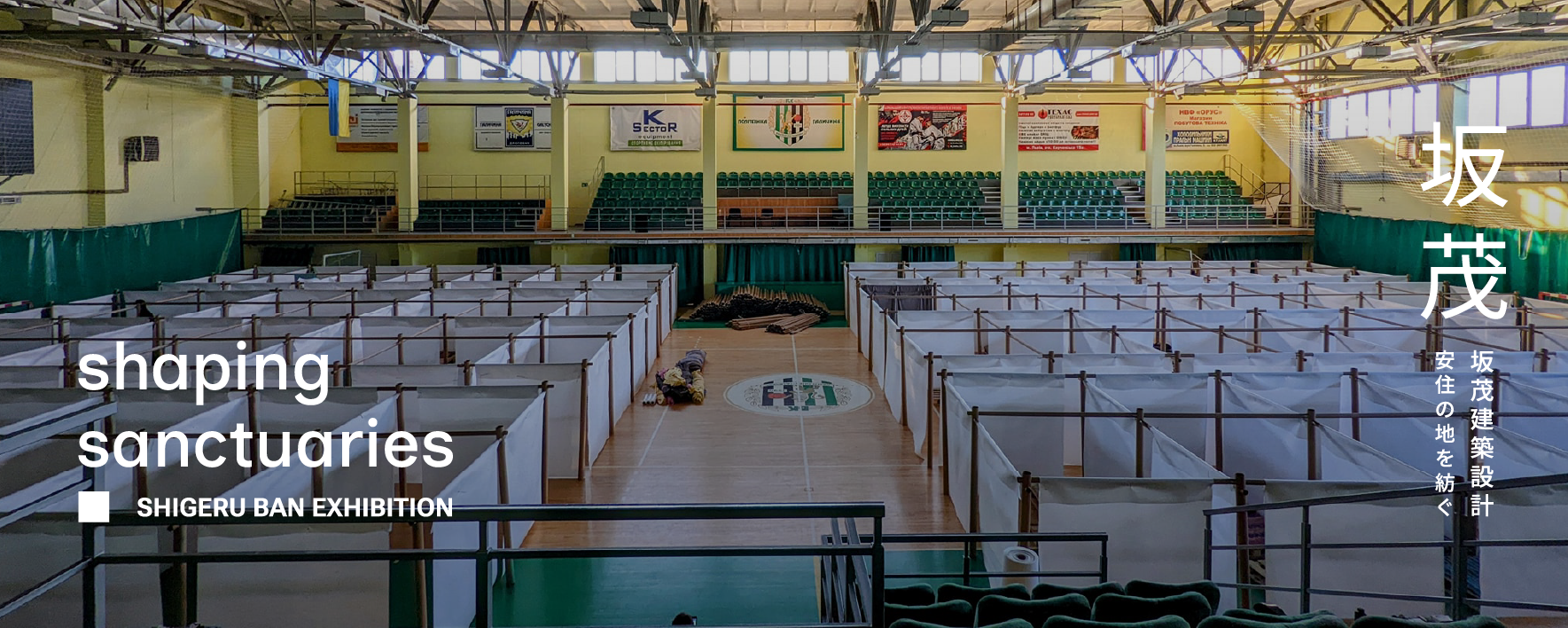
The Japan Information & Culture Center (JICC), Embassy of Japan in Washington, D.C., is honored to present Shigeru Ban: Shaping Sanctuaries, an exhibition highlighting the ingenuity and humanitarian work of world-renowned architect Shigeru Ban and his nonprofit organization, the Voluntary Architects’ Network (VAN).
Visitors will be immersed in Ban’s signature paper tube structures and introduced to the Paper Partition System (PPS), which provides shelter and privacy for those displaced by disaster and conflict. Within the system, visitors will encounter Ban’s sustainable cardboard bed design. Printed upon the canvas curtains that line the partitions are displays of both commercial and charitable projects by Ban and the VAN, respectively.
Throughout his career, Ban has challenged the conventions of architecture by designing with reusable and unexpected materials such as paper tubes and shipping containers. His work reflects the Japanese philosophy of mottainai (もったいない), which expresses respect for materials and regret over waste.
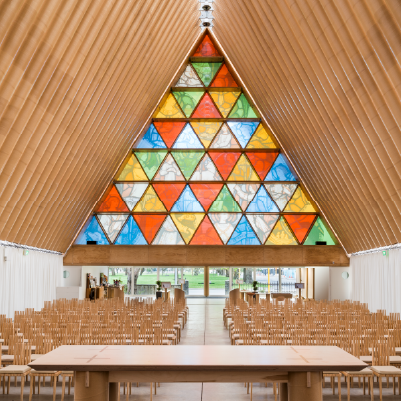
Through projects developed with the VAN, Ban demonstrates how thoughtful design can restore autonomy and improve living conditions in emergency situations. Featured works include the Paper Log House built for survivors of the 1995 Great Hanshin-Awaji earthquake; Temporary Container Housing in Onagawa following the 2011 Great East Japan Earthquake; the Styrofoam Housing System developed for internally displaced people in Ukraine; and the striking Cardboard Cathedral, constructed after the 2011 Christchurch earthquake in New Zealand. Alongside these humanitarian efforts, the exhibition also highlights Ban’s innovative architectural practice around the world. Visitors will encounter projects such as the Simose Art Museum in Hiroshima, the Swatch Omega Headquarters in Bienne, Switzerland, the Tainan Art Museum in Taiwan, and more.

ABOUT THE ARCHITECT
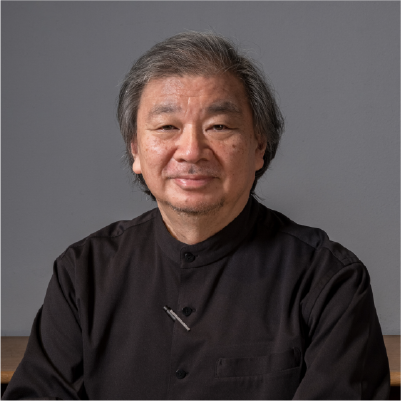
Born in Tokyo in 1957, Ban graduated from the Cooper Union with a Bachelor of Architecture in 1984. He founded Shigeru Ban Architects in 1985 and later established offices in New York and Paris. Since 1985, Ban has developed a unique structural system using recycled paper as a building material and, alongside his architectural work, has been engaged in disaster relief efforts worldwide. In 1995, he founded a nonprofit organization named Voluntary Architects’ Network (VAN). He is the recipient of le grade de commandeur of L’Ordre des Arts et des Lettres, France(2014), the Pritzker Architecture Prize (2014), the Mother Teresa Social Justice Award (2017), the Princess of Asturias Award for Concord (2022), and thePraemium Imperiale for Architecture (2024). His major works include Centre Pompidou Metz (2010, France), Cardboard Cathedral (2013, NZ), La Seine Musicale (2017, France), Mt. Fuji World Heritage Centre Shizuoka (2017, France), Tainan Art Museum (2019), SIMOSE (2023), and Toyota City Museum (2024). From 2023 he serves as Special Guest Professor at Shibaura Institute of Technology. In March 2025, he was named as a new member of the Japan Art Academy and in October 2025 as a Person of Cultural Merit by the Japanese Government. He has been awarded as the recipient of the 2026 AIA Gold Medal as the fourth to receive this honor among Japanese architects.

ABOUT THE VOLUNTARY ARCHITECTS' NETWORK
Voluntary Architects’ Network (VAN) is a non-profit organization founded in 1995 by architect Shigeru Ban. Working with architects, students, and volunteers, VAN provides architectural support for people affected by disasters and conflict worldwide through the design and delivery of rapidly deployable, low-cost, and sustainable structures, including emergency shelters, temporary housing, and community facilities, aiming to improve living conditions in urgent situations. Since its founding, VAN has carried out humanitarian projects in affected regions around the world, contributing to both immediate relief and longer-term recovery.
PHOTO & VIDEO POLICY: The Japan Information & Culture Center (JICC), Embassy of Japan reserves the right to use any photograph/video taken at any event sponsored by JICC, without the expressed written permission of those included within the photograph/video. JICC may use the photograph/video in publications or other media material produced, used or contracted by JICC including but not limited to: brochures, invitations, newspapers, magazines, television, social media, websites, etc. To ensure the privacy of individuals and children, images will not be identified using full names or personal identifying information without written approval from the photographed subject, parent or legal guardian. A person attending a JICC event who does not wish to have their image recorded for distribution should make their wishes known to the photographer/videographer, and/or the event organizers.